



 English
 Chinese
 Japan
Japan German
News

High-precision bending processing service: Automated bending process
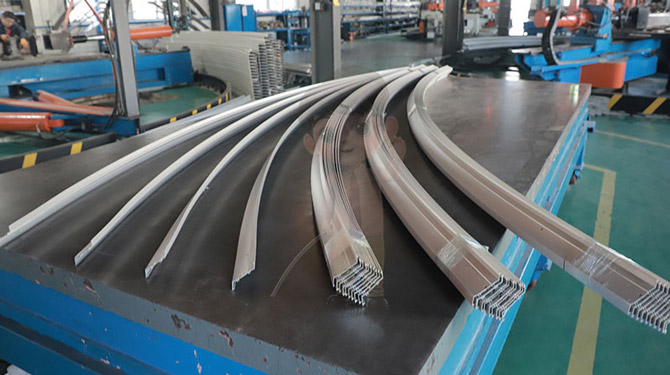
In modern industrial manufacturing, bending and forming metal components is an essential part of producing high-quality, reliable products. From structural components in construction to machinery parts and transportation systems, precision in bending directly affects the functionality, durability, and aesthetic quality of the final product. With the increasing complexity of engineering projects, traditional manual bending methods often fall short in terms of accuracy, efficiency, and repeatability. Beijing Shengda Weiye Bending Company wherehigh-precision bending processingcombined withautomated bending processesplays a critical role, delivering consistent, cost-effective, and high-quality outcomes for a wide range of industrial applications.
1. Importance of High-Precision Bending
1.1 Structural Accuracy
Bending is not just about shaping metal; it directly influences the structural integrity of components. Even minor deviations in angle, radius, or curvature can lead to misalignment in assemblies, reduced load-bearing capacity, or premature material fatigue. High-precision bending ensures that each component meets exact specifications, maintaining both functional performance and structural stability.
1.2 Consistency Across Batches
In large-scale production, maintaining uniformity across multiple pieces is essential. Automated high-precision bending allows manufacturers to produce identical components repeatedly without human error, minimizing waste, reducing rework, and ensuring compatibility across assembly lines.
1.3 Enhanced Material Performance
Precision bending also optimizes the stress distribution in materials. By accurately controlling bend angles and radii, manufacturers reduce the risk of cracks, surface defects, or internal stress concentrations. This results in components that are stronger, more durable, and better suited for demanding industrial applications.
2. Advantages of Automated Bending Processes
Automation in bending processes transforms traditional metal fabrication, offering significant advantages:
2.1 Improved Accuracy and Precision
Automated bending machines are equipped with advanced CNC (Computer Numerical Control) systems that precisely control bend angles, radii, and bend locations. These systems eliminate inconsistencies caused by manual operation and achieve tolerances as tight as ±0.5° or even smaller, which is critical for complex or multi-angle bending tasks.
2.2 Higher Efficiency and Productivity
Automated systems can operate continuously and perform multiple bends in rapid succession. Batch processing becomes faster and more reliable, allowing manufacturers to meet tight deadlines without sacrificing quality. The reduction in setup time and the ability to handle multiple bending programs also improves overall production efficiency.
2.3 Complex Curve and Multi-Angle Capability
One of the key strengths of automated bending is its ability to handle complex geometries and multi-angle designs. Unlike manual bending, which is often limited to simple shapes, CNC-controlled machines can bend metal into intricate curves and compound angles with high precision. This capability is essential in industries such as aerospace, automotive, industrial machinery, and architectural structures, where precision and complexity are both required.
2.4 Reduced Material Waste
Automated bending minimizes errors and material deformation, ensuring optimal use of raw materials. With precise bending programs, manufacturers can maximize material utilization, reduce scrap, and achieve cost savings on bulk production.
2.5 Enhanced Safety
Manual bending operations pose risks to workers, including pinch injuries, repetitive strain, and exposure to heavy equipment. Automated bending systems reduce human intervention, thereby improving workplace safety and compliance with occupational health standards.
3. Applications of High-Precision Automated Bending
Automated high-precision bending processes are applied across multiple industries:
3.1 Construction and Architectural Engineering
Structural beams, curtain wall frames, and metal railings require exact bends to maintain stability and aesthetic appeal.
Curved architectural features, such as arches or ornamental metalwork, benefit from consistent and precise automated bending.
3.2 Industrial Machinery
Frames, brackets, and supports for heavy machinery must withstand high loads. Automated bending ensures that all components meet design tolerances, reducing assembly issues and improving operational reliability.
3.3 Automotive and Transportation
Vehicle frames, chassis parts, exhaust systems, and other components require precise multi-angle bends. Automated systems handle these complex geometries efficiently, ensuring safety, performance, and compliance with industry standards.
3.4 Aerospace and Energy
Aerospace components, such as structural panels and tubing, demand high precision to meet strict engineering specifications. Automated bending allows manufacturers to achieve the required tolerances consistently.
Energy infrastructure, including pipelines and support structures, relies on precise bends to ensure stability and performance under pressure.
4. Process Optimization in Automated Bending
To fully leverage automated bending, manufacturers adopt a range of optimization strategies:
4.1 CNC Program Simulation
Before production, the bending process is simulated using CNC software to predict stresses, bends, and potential deformation. This preemptive approach reduces errors, prevents material failure, and ensures smooth production.
4.2 Standardized Workflow
Automated bending benefits from standardized workflows, including material preparation, fixture setup, and sequence programming. This reduces variability, improves repeatability, and ensures each component meets quality standards.
4.3 Real-Time Monitoring
Advanced bending machines feature sensors and real-time monitoring systems to track the bending process. Deviations in angle or force are automatically corrected, further enhancing precision and reducing rework.
4.4 Integration with Production Lines
Automated bending can be integrated into broader production lines, including cutting, welding, and assembly stations, creating seamless manufacturing processes that minimize downtime and maximize throughput.
5. Economic and Quality Benefits
Investing in high-precision automated bending yields multiple benefits:
Cost Reduction:Less material waste, reduced rework, and higher production efficiency translate to lower overall costs.
Quality Assurance:Consistent precision reduces errors and improves product reliability, increasing customer satisfaction.
Time Savings:Automated processes accelerate production timelines, enabling manufacturers to meet tight delivery schedules.
Scalability:Easy programming and automation make scaling production for large projects or batch orders straightforward.
High-precision bending processing, supported by automated bending systems, represents a major advancement in industrial fabrication. By combining precision, efficiency, and flexibility, automated bending enables manufacturers to produce complex curves and multi-angle structures with consistency and reliability. The benefits are far-reaching: enhanced product quality, reduced material waste, improved safety, and cost-effective production.
Industries ranging from construction and industrial machinery to automotive, aerospace, and energy infrastructure increasingly rely on automated bending processes to meet high standards and deliver competitive advantages. In an era where precision and efficiency define industrial success, high-precision automated bending is not merely a process—it is a cornerstone of modern manufacturing excellence.
 LIST
LIST08
2025-12
Number of visitors:1
HOT NEWS
-
Custom Metal Bending Solutions for Industrial Manufacturing
2026-10-14
-
Aluminum Bending Services | Professional Aluminum Profile Bending Solutions
2026-09-30
-
Tensile Bending Explained: How Precision Shapes Complex Metal Profiles
2026-09-16
-
Custom Aluminum Profile Stretch Bending Solutions
2026-09-01