



 English
 Chinese
 Japan
Japan German
News

Choosing the Right Metal Bending Technique for Your Production Needs
is a fundamental process in modern manufacturing, widely used in industries such as automotive, aerospace, construction, electronics, and custom fabrication. From simple brackets to complex structural components, the bending method you choose directly affects product quality, production efficiency, and overall cost. Selecting the right metal bending technique requires a careful evaluation of material type, thickness, design complexity, tolerance requirements, and production volume.
1. Understanding the Basics of Metal Bending
Metal bending is a forming process that deforms metal along a straight axis to create an angle or curve without removing material. The goal is to achieve precise geometry while maintaining structural integrity. However, different bending methods vary significantly in tooling, equipment, force requirements, and achievable accuracy.
Before choosing a technique, manufacturers must clearly define:
Material type (steel, aluminum, stainless steel, copper, etc.)
Material thickness
Required bend radius and angle
Surface finish requirements
Production scale (prototype, small batch, or mass production)
2. Common Metal Bending Techniques
Press Brake Bending
Press brake bending is one of the most widely used methods in sheet metal fabrication. It uses a punch and die set mounted on a press brake machine to form precise bends.
Best for:
Medium to high production volumes
Precise angle control
Complex multi-bend parts
Modern CNC press brakes offer high repeatability and programmable accuracy, making them ideal for industries requiring tight tolerances.
Roll bending uses a series of rollers to gradually curve metal sheets or plates into cylindrical or conical shapes.
Best for:
Large-radius curves
Pipes and structural components
Tanks and enclosures
This method is commonly used in heavy fabrication and structural applications where smooth, continuous curves are required.
Rotary draw bending is commonly used for bending tubes and pipes. It clamps the material to a rotating die, ensuring consistent radius and minimal distortion.
Best for:
Tubing applications
Automotive exhaust systems
Handrails and frames
This technique provides excellent precision and surface finish, especially for tight-radius bends.
Air bending is a flexible press brake technique where the punch does not fully bottom out in the die. Instead, the bend angle is determined by the punch depth.
Advantages:
Requires less force
Allows multiple angles with the same tooling
Reduces tooling costs
Air bending is suitable for general fabrication and cost-efficient production runs.
Bottoming forces the sheet fully into the die, while coining applies extreme pressure to eliminate springback.
Best for:
High-precision parts
Tight tolerance requirements
Consistent mass production
However, these methods require higher force and more specialized tooling.
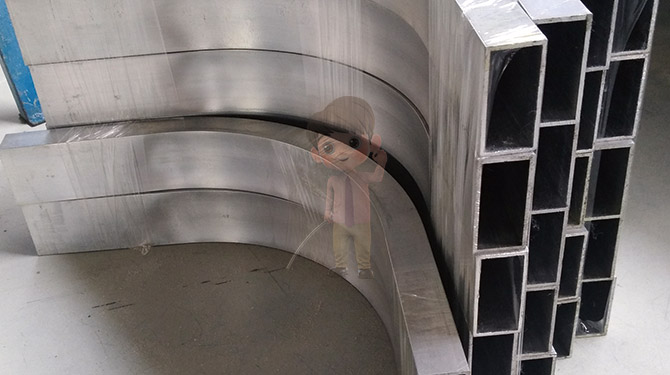
3. Factors to Consider When Choosing a Bending Method
Different metals behave differently during bending. For example:
Aluminum bends easily but may crack if the radius is too tight.
Stainless steel requires greater force due to its strength.
High-strength steel may demand specialized tooling.
Understanding yield strength and ductility is critical to preventing fractures or deformation.
Each material has a minimum bend radius to avoid cracking. If your design includes tight bends, you may need precision methods like rotary draw bending or coining.
Low volume / Prototyping:*CNC press brake or air bending offers flexibility.
High volume:*Automated press brake systems or dedicated tooling may reduce long-term costs.
Large structural parts:*Roll bending may be more efficient.
Choosing the right method depends heavily on scalability and cost efficiency.
Industries like aerospace and electronics require extremely tight tolerances. In such cases, bottoming or CNC-controlled bending systems are recommended.
For less critical applications, air bending may provide sufficient accuracy at a lower cost.
Some bending techniques may leave tooling marks or slight distortions. If surface appearance is critical, such as in decorative or visible components, precision-controlled methods should be selected.
4. Cost Considerations
Tooling, labor, machine time, and material waste all impact total production cost. While advanced methods like coining offer higher precision, they also increase setup and operational expenses.
Balancing cost and performance is essential. For many applications, a moderately precise but flexible method like air bending may provide the best return on investment.
5. The Role of Automation and CNC Technology
Modern manufacturing increasingly relies on CNC-controlled bending systems. These machines enhance repeatability, reduce human error, and improve efficiency.
For businesses aiming to scale production or ensure consistent part quality, investing in CNC metal bending solutions can provide long-term competitive advantages.
6. Collaborating with Experienced Fabricators
If your production needs are complex or specialized, working with an experienced metal fabrication partner can help determine the optimal bending strategy. Professional fabricators analyze:
Design drawings
Material specifications
Load requirements
Assembly compatibility
This collaboration ensures that the selected bending technique aligns with functional and commercial goals.
Choosing the right metal bending technique is not a one-size-fits-all decision. It requires a careful balance between material characteristics, design requirements, production volume, cost constraints, and quality expectations.
Press brake bending offers versatility and precision, roll bending suits large-radius structures, rotary draw bending excels in tubing applications, and bottoming or coining delivers high-accuracy results. By evaluating your specific production needs and consulting experienced professionals, you can select a bending method that ensures efficiency, durability, and cost-effectiveness.
 LIST
LIST