



 English
 Chinese
 Japan
Japan German
News

Precision Hot Bending Solutions for Custom Metal Profiles
In modern industrial manufacturing, the demand for precision-shaped metal components is higher than ever. Whether in construction, automotive, aerospace, or energy sectors, custom metal profiles with complex curves and accurate dimensions are essential for both structural integrity and aesthetic appeal.Precision hot bending solutions have emerged as a key technique to meet these requirements, offering flexibility, efficiency, and superior quality compared to traditional mechanical methods. This article explores the advantages, process, applications, and considerations for hot bending of custom metal profiles.
Hot bending is a metal forming process that involves heating a metal workpiece to a specific temperature before bending it into a desired shape. Unlike cold bending, which relies solely on mechanical force, hot bending reduces material stress and increases ductility, making it ideal for complex or tight-radius curves. This process can be applied to a wide range of metals, including steel, aluminum, copper, and various alloys.
Key Advantages of Hot Bending
1.Enhanced Precision and Accuracy
Heating the material allows for smoother curves and tighter tolerances, minimizing deformation, spring-back, or cracking. This ensures the final profile matches exact design specifications, which is critical for engineering applications where even minor deviations can affect assembly or performance.
2.Versatility Across Complex Profiles
Hot bending can accommodate intricate geometries, including compound curves, elliptical shapes, and multi-plane bends. This versatility makes it ideal for custom projects that cannot be achieved with standard cold bending equipment.
3.Improved Material Performance
Heating the metal reduces internal stress and prevents work hardening, resulting in a stronger and more uniform structure. The process also preserves the material’s surface quality, which is essential for visible components in architectural or decorative applications.
4.Efficiency and Cost-Effectiveness
By reducing the need for extensive post-processing or corrective measures, hot bending saves both time and material. This efficiency is especially valuable in large-scale industrial production or when working with expensive alloys.
The hot bending process typically follows several key steps:
1.Material Preparation
Profiles are selected based on project requirements, ensuring proper dimensions and alloy composition. Surface cleaning may be performed to remove dirt, rust, or coatings that could interfere with heating or bending.
2.Controlled Heating
The metal is heated to a precise temperature using furnaces, induction heaters, or localized flame sources. The temperature is carefully controlled to achieve optimal ductility without compromising material integrity.
3.Bending Operation
Once heated, the metal profile is bent using specialized dies, rollers, or CNC-controlled machinery. Operators or automated systems ensure that the bend radius, angle, and orientation match the design.
4.Cooling and Stabilization
After bending, the metal is cooled gradually to stabilize its shape. Controlled cooling prevents warping or cracking, and in some cases, additional treatments like stress relieving or surface finishing may be applied.
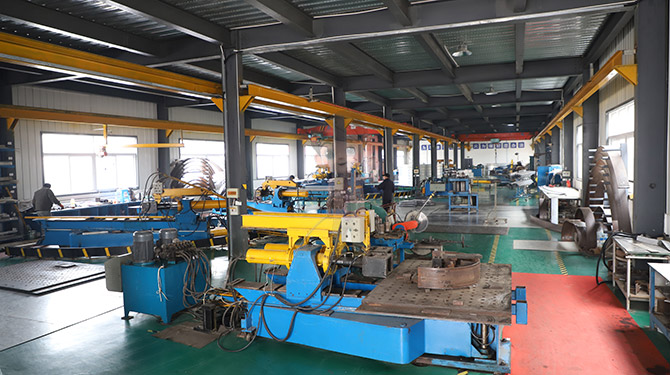
Hot bending of custom metal profiles is widely used across multiple industries:
Construction and Architecture: Curved beams, handrails, metal facades, and decorative structures
Automotive Industry: Exhaust systems, chassis components, and structural supports
Aerospace and Defense: Lightweight structural elements with complex aerodynamic curves
Energy and Infrastructure: Pipe bends, tubular frameworks, and industrial equipment supports
Furniture and Design: Custom metal frames, artistic sculptures, and ergonomic designs
In each case, hot bending allows designers and engineers to create precise, durable, and visually appealing metal components.
When selecting a hot bending provider for custom metal profiles, consider the following:
1.Material Expertise
Ensure the provider has experience with your specific metal type, including alloys that may require specialized heating or handling.
2.Precision Capabilities
Check whether the facility uses CNC-controlled or automated bending systems to achieve tight tolerances.
3.Custom Design Support
Providers should be able to work with CAD models or technical drawings to translate complex designs into accurate bends.
4.Quality Assurance and Testing
High-quality hot bending services include inspections for surface integrity, dimensional accuracy, and structural performance.
5.Lead Time and Capacity
Consider the provider’s ability to handle production volume and meet project deadlines without compromising quality.
Precision hot bending solutions for custom metal profiles combine the best of engineering precision and material performance. By leveraging controlled heat, advanced machinery, and expert knowledge, manufacturers can achieve complex shapes, tight tolerances, and superior structural integrity. Whether for industrial, architectural, automotive, or artistic applications, hot bending offers a flexible, efficient, and cost-effective method to produce high-quality metal components.
Investing in precision hot bending not only enhances product quality but also ensures that complex designs can be realized safely and reliably, making it a critical capability for modern metal fabrication and custom engineering projects.
 LIST
LIST13
2026-02
Number of visitors:1
HOT NEWS
-
Tensile Bending Explained: How Precision Shapes Complex Metal Profiles
2026-09-16
-
Custom Aluminum Profile Stretch Bending Solutions
2026-09-01
-
Professional Metal Bending for Custom Fabrication Projects
2026-08-17
-
Aluminum Bending Technology: Processes, Applications, and Industry Advantages
2026-08-01