



 English
 Chinese
 Japan
Japan German
News

The Future of Aluminum Bending: Key Trends and Innovations in Manufacturing
Aluminum has become one of the most widely used materials in various industries, from automotive and aerospace to construction and electronics. Its lightweight nature, high strength-to-weight ratio, and resistance to corrosion make it an ideal choice for a broad range of applications. Aluminum bending, a critical process in shaping aluminum components, plays a pivotal role in the manufacturing of everything from structural parts to intricate designs. As the demand for lighter, stronger, and more efficient products continues to rise, the future of aluminum bending is poised for significant transformation, driven by technological innovations, evolving manufacturing methods, and sustainability concerns.
1.Automation and Robotics in Aluminum Bending
One of the most significant trends in the aluminum bending industry is the increasing adoption of automation and robotics. Traditional manual bending processes, while effective, are time-consuming and prone to human error, which can result in inconsistent product quality and inefficiencies. As industries push for higher productivity and precision, automated bending systems are becoming more commonplace.
Advanced robotics and CNC (computer numerical control) systems allow for faster, more accurate bending of aluminum with minimal operator input. These systems use sophisticated software that can control the bending angle, force, and speed to ensure a perfect, repeatable bend every time. This eliminates human error, reduces waste, and speeds up production cycles.
The integration of robotics into aluminum bending also offers the ability to perform complex bends that were previously challenging for human operators. For example, in industries like aerospace and automotive, where intricate and precise bends are often required, robotics allows manufacturers to push the boundaries of what’s possible in aluminum bending, opening the door to new design opportunities.
2.3D Bending and Additive Manufacturing Integration
The integration of 3D technologies in the manufacturing process has had a profound impact on the bending of aluminum. One notable development is 3D bending, a technique that combines the flexibility of 3D printing with traditional bending processes. This approach allows for more intricate designs, reducing the need for multiple bending processes or complex tooling.
In the context of aluminum, 3D bending could enable manufacturers to create parts with geometries that would otherwise be difficult to achieve using conventional methods. For instance, aerospace components often require complex curves and shapes to improve aerodynamics or reduce weight. Traditional aluminum bending might struggle with such precise designs, but 3D bending opens new possibilities by adding an extra layer of flexibility to the process.
Furthermore, additive manufacturing (3D printing) is increasingly being used in tandem with aluminum bending, particularly in industries where rapid prototyping is crucial. 3D printed aluminum components can be bent into more complex shapes during or after the additive process, further expanding the potential of both technologies.
3.Advanced Materials and Aluminum Alloys
The future of aluminum bending is also tied to the continued development of new materials and advanced aluminum alloys. As industries like aerospace and automotive continue to seek stronger, lighter, and more durable materials, manufacturers are developing alloys that offer superior performance characteristics. These alloys often come with new challenges when it comes to bending, as they may have different mechanical properties compared to traditional aluminum.
For example, aluminum alloys with higher strength-to-weight ratios or increased resistance to corrosion may require specialized bending techniques to maintain material integrity during the process. Manufacturers will need to adapt their bending methods to handle these new materials effectively. In particular, advanced alloys may need more precise control over bending temperatures, forces, and speeds to ensure they don’t crack or deform unexpectedly.
Additionally, aluminum manufacturers are exploring ways to combine aluminum with other lightweight materials, such as carbon fiber or titanium, to create hybrid materials that can be bent and shaped without compromising strength or performance. These hybrid materials could revolutionize industries that rely heavily on aluminum, offering better overall performance while still leveraging the benefits of aluminum's low weight and corrosion resistance.
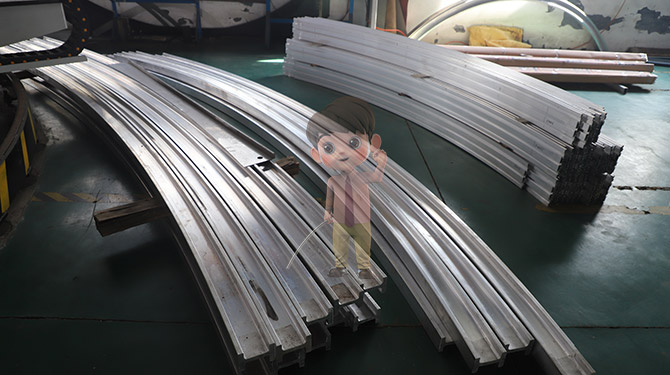
4.Sustainability and Green Manufacturing Practices
Sustainability is an increasingly important focus in every industry, and aluminum bending is no exception. Aluminum itself is highly recyclable, and the industry is continuously working on making the bending process more energy-efficient and environmentally friendly. Future innovations in aluminum bending will likely center on reducing energy consumption, minimizing waste, and improving the overall sustainability of the process.
For instance, advanced bending technologies, such as induction heating, allow for more energy-efficient ways of heating aluminum to the required bending temperatures. These technologies can reduce energy use compared to traditional methods, which rely on older, less efficient heating systems. Additionally, the use of precision bending techniques can help minimize scrap material, ensuring that as little aluminum as possible is wasted during production.
Manufacturers are also focusing on reducing the carbon footprint of aluminum production, which is traditionally energy-intensive. New techniques in aluminum smelting and production, including the development of low-carbon technologies, can reduce the environmental impact of producing the raw material itself. This, in turn, will make the entire aluminum manufacturing process more sustainable, from raw material production to final product fabrication.
5.Improved Software and Simulation Tools
As aluminum bending becomes more complex and precision-driven, the need for advanced software solutions has grown. One area of innovation lies in the use of simulation tools that allow manufacturers to model and simulate the bending process before actual production begins. These tools use detailed algorithms to predict how aluminum will react to specific bending conditions, such as pressure, temperature, and angle.
The use of simulation software can drastically reduce trial-and-error experimentation and help manufacturers fine-tune their processes before producing expensive prototypes or large production runs. These tools also help optimize the entire bending process, identifying the most efficient bending techniques to reduce costs, time, and waste.
With advances in machine learning and artificial intelligence, future software could go beyond simulation to provide real-time feedback and adjustments during the bending process, ensuring continuous quality control and further reducing the chances of defects.
6.Customization and On-Demand Production
As industries increasingly demand tailored solutions and smaller production runs, the need for flexible, on-demand manufacturing solutions is growing. Aluminum bending technology will need to adapt to meet the needs of this more customized, agile manufacturing environment.
With the rise of e-commerce and just-in-time production models, manufacturers are looking for ways to offer quicker turnaround times for custom aluminum products. This is driving demand for more flexible bending systems that can quickly switch between different products or designs with minimal downtime or setup. Modern aluminum bending equipment, particularly when integrated with advanced automation and software, can enable such on-demand production, making it possible to produce smaller batches of custom products faster and more efficiently than ever before.
The future of aluminum bending is bright, with numerous innovations and trends paving the way for more efficient, precise, and sustainable manufacturing practices. From automation and robotics to the integration of 3D technologies and advanced materials, the possibilities for aluminum bending are expanding rapidly. As manufacturers embrace these new technologies, they will not only enhance production efficiency and product quality but also position themselves for long-term success in an increasingly competitive and environmentally conscious market.
 LIST
LIST07
2026-03
Number of visitors:1
HOT NEWS
-
Custom Metal Bending Solutions for Industrial Manufacturing
2026-10-14
-
Aluminum Bending Services | Professional Aluminum Profile Bending Solutions
2026-09-30
-
Tensile Bending Explained: How Precision Shapes Complex Metal Profiles
2026-09-16
-
Custom Aluminum Profile Stretch Bending Solutions
2026-09-01