



 English
 Chinese
 Japan
Japan German
News

From Sheet to Shape: Understanding Metal Bending Processes and Best Practices
Metal bending is one of the most fundamental operations in modern fabrication, transforming flat sheets into functional components used across industries—from automotive and aerospace to construction and consumer products. While the concept may appear simple, achieving consistent, high-quality bends requires a solid understanding of materials, processes, tooling, and control methods. Done well, metal bending delivers precision, strength, and efficiency; done poorly, it leads to defects, rework, and wasted cost.
At its core, metal bending is the deformation of sheet or plate along a straight axis, creating an angle or curve without removing material. The most widely used methods include V-bending, U-bending, and edge bending, typically performed on press brakes. In V-bending, a punch presses the sheet into a V-shaped die to form a specific angle; in U-bending, the shape is more rounded; and in edge bending, the workpiece is bent along its edge using a wiping die. For curved or cylindrical shapes, processes like roll bending and rotary draw bending are often used, particularly for tubes and profiles.
A key factor in successful bending is understanding material behavior. Different metals respond differently under stress. For example, aluminum is lightweight and easy to form but more prone to cracking if bent too tightly, while stainless steel offers strength and corrosion resistance but requires greater force to bend. Material thickness, grain direction, and temper condition also influence the outcome. Bending parallel to the grain, for instance, can increase the risk of fracture, so aligning bends perpendicular to the grain is often recommended.
Another critical concept is springback—the tendency of metal to partially return to its original shape after the bending force is removed. Springback varies depending on material type, thickness, and bend radius. To compensate, operators may overbend slightly or use precise tooling and machine settings. Modern CNC press brakes often include software that predicts and corrects for springback, improving repeatability and reducing trial-and-error adjustments.
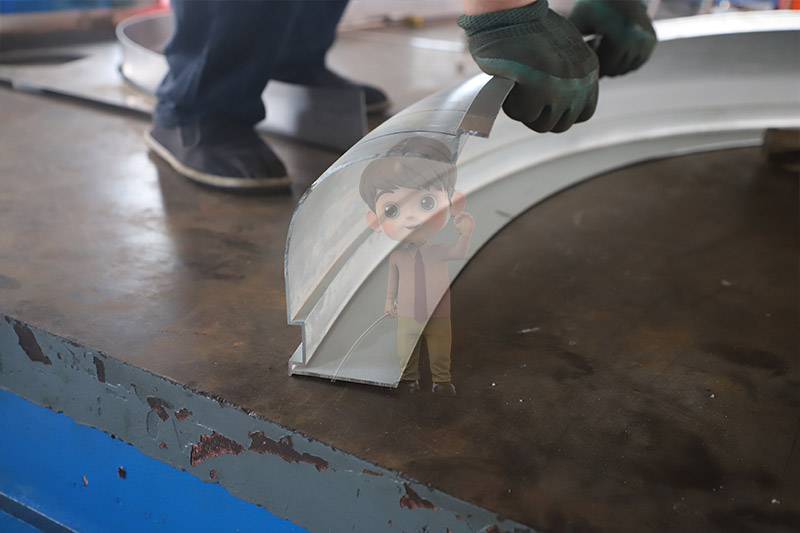
Tooling selection plays a major role in both quality and efficiency. The choice of punch and die determines the bend angle, radius, and surface finish. A general guideline is that the die opening should be approximately 6 to 10 times the material thickness, though this varies by application. Using the correct tooling not only ensures dimensional accuracy but also minimizes surface damage and extends tool life. For high-precision work, specially ground or coated tools may be used to maintain tight tolerances.
Equally important is machine setup and process control. Accurate backgauge positioning, consistent material alignment, and proper tonnage settings are essential for repeatable results. Operators must also consider factors such as bend sequence and part geometry. Complex parts may require multiple bends in a specific order to avoid interference or distortion. In high-volume production, automation and robotic handling can further enhance consistency and throughput.
Quality control in metal bending goes beyond simply measuring angles. It involves verifying dimensional accuracy, checking for surface defects such as cracks or scratches, and ensuring structural integrity. Tools like angle measurement systems, calipers, and coordinate measuring machines (CMM) are commonly used. In critical applications, non-destructive testing methods may be applied to detect internal flaws.
To achieve the best results, several best practices should be followed. First, always match the bending process to the material and design requirements—there is no one-size-fits-all approach. Second, account for bend allowance and bend deduction during the design phase to ensure the final part meets dimensional specifications. Third, maintain equipment and tooling regularly to avoid inconsistencies. Fourth, conduct test bends when working with new materials or complex geometries. And finally, document and standardize successful setups to streamline future production.
Safety is another essential consideration. Metal bending involves high forces and moving machinery, so operators must follow proper safety protocols, including the use of protective equipment and machine guards. Well-trained personnel and clear procedures reduce the risk of accidents and contribute to a more efficient workflow.
In conclusion, metal bending is both an art and a science. It combines material knowledge, mechanical precision, and practical experience to turn flat sheets into functional, high-quality components. By understanding the underlying processes and adhering to best practices, manufacturers can improve product quality, reduce waste, and stay competitive in an increasingly demanding market. From simple brackets to complex structural parts, mastering metal bending is a key step in shaping the modern world.
 LIST
LIST08
2026-05
Number of visitors:1
HOT NEWS
-
Tensile Bending Explained: How Precision Shapes Complex Metal Profiles
2026-09-16
-
Custom Aluminum Profile Stretch Bending Solutions
2026-09-01
-
Professional Metal Bending for Custom Fabrication Projects
2026-08-17
-
Aluminum Bending Technology: Processes, Applications, and Industry Advantages
2026-08-01