



 English
 Chinese
 Japan
Japan German
News

Emerging Trends and Innovations in Construction Material Stretch Bending Technology
In recent years, construction material stretch bending technology has undergone significant transformation, driven by advancements in engineering, automation, and digital design. As modern architecture increasingly emphasizes complex geometries, lightweight structures, and sustainable practices, stretch bending has become an essential process in shaping structural and decorative components. From curved curtain walls to intricate steel frameworks, the demand for precision and efficiency continues to push the boundaries of this technology.
One of the most notable trends is the integration of digital design tools with bending processes. Building Information Modeling (BIM) and Computer-Aided Design (CAD) systems now play a critical role in planning and executing stretch bending operations. These tools allow engineers to simulate bending behavior, predict material deformation, and optimize parameters before actual production begins. As a result, errors are minimized, material waste is reduced, and overall project timelines are shortened.
Automation and intelligent manufacturing are also reshaping the stretch bending landscape. Modern bending machines are increasingly equipped with CNC (Computer Numerical Control) systems, enabling highly precise and repeatable operations. These systems can automatically adjust tension, curvature, and positioning based on programmed inputs, significantly improving consistency and productivity. In addition, the adoption of robotics in handling and positioning materials reduces manual labor and enhances workplace safety.
Another important innovation lies in material science. The development of high-strength, lightweight materials—such as advanced aluminum alloys, high-performance steel, and composite materials—has expanded the possibilities of stretch bending in construction. These materials not only offer improved structural performance but also require more sophisticated bending techniques to avoid defects such as cracking or springback. Consequently, new forming methods and process controls are being developed to accommodate their unique properties.
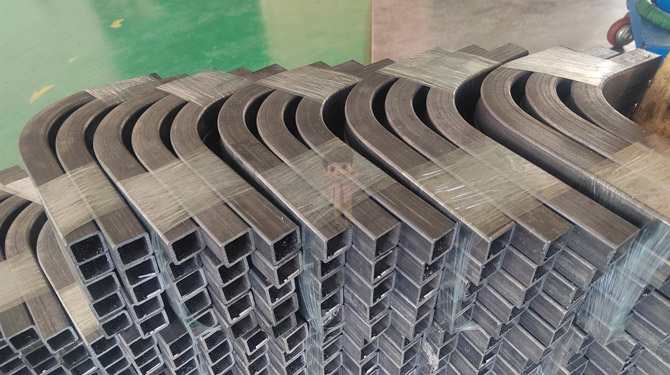
Precision control and real-time monitoring technologies are further enhancing the quality of stretch bending processes. Sensors and data acquisition systems are now commonly integrated into equipment to monitor stress, strain, and temperature during bending. This real-time feedback allows operators to make immediate adjustments, ensuring that the final product meets strict quality standards. In some advanced systems, artificial intelligence is used to analyze data and recommend optimal process parameters, further improving efficiency and accuracy.
Sustainability has also become a key driver of innovation. Construction companies are increasingly focused on reducing environmental impact, and stretch bending technology is evolving to support these goals. Improved process efficiency leads to less material waste, while energy-efficient machinery reduces overall power consumption. Additionally, the ability to precisely shape materials reduces the need for secondary processing, contributing to a more sustainable manufacturing cycle.
Customization and flexibility are gaining importance as architectural designs become more complex and unique. Modern stretch bending systems are designed to handle a wide range of profiles and materials, allowing for greater design freedom. Whether it is large-scale curved beams for stadiums or delicate aluminum frames for façades, manufacturers can now produce customized components with high precision and relatively short lead times.
Looking ahead, the future of construction material stretch bending technology will likely be shaped by further integration of digitalization, automation, and smart manufacturing. The use of digital twins—virtual replicas of physical processes—may enable even more accurate simulation and optimization. Meanwhile, advancements in AI and machine learning could lead to fully autonomous bending systems capable of self-adjustment and continuous improvement.
In conclusion, emerging trends and innovations in construction material stretch bending technology are redefining what is possible in modern construction. By combining advanced materials, intelligent systems, and sustainable practices, this field is evolving to meet the growing demands of contemporary architecture. As technology continues to advance, stretch bending will remain a vital tool in creating efficient, aesthetically pleasing, and structurally sound buildings.
 LIST
LIST27
2026-03
Number of visitors:1
HOT NEWS
-
Tensile Bending Explained: How Precision Shapes Complex Metal Profiles
2026-09-16
-
Custom Aluminum Profile Stretch Bending Solutions
2026-09-01
-
Professional Metal Bending for Custom Fabrication Projects
2026-08-17
-
Aluminum Bending Technology: Processes, Applications, and Industry Advantages
2026-08-01