



 English
 Chinese
 Japan
Japan German
News

Aluminum Bending Applications Explained: From Architectural Profiles to Transportation Components
As industries continue to evolve toward lighter, stronger, and more efficient materials, aluminum has become one of the most widely used metals in modern engineering and construction. Its excellent strength-to-weight ratio, corrosion resistance, recyclability, and aesthetic appeal make it a preferred material across numerous sectors. However, many projects require aluminum profiles and components to be formed into curved or custom shapes, which is where aluminum bending technology plays a critical role.
Aluminum bending is a specialized manufacturing process that allows aluminum extrusions, tubes, channels, and structural profiles to be shaped into precise curves without compromising their structural integrity. From iconic architectural facades to advanced transportation systems, aluminum bending supports a wide range of applications that demand both functionality and visual appeal.
Understanding Aluminum Bending Technology
Aluminum bending involves reshaping aluminum profiles into specific radii and curves using specialized machinery and controlled forming techniques. Depending on the profile type, material thickness, and project requirements, manufacturers may use stretch bending, roll bending, rotary draw bending, or other advanced forming methods.
The primary objective is to achieve the desired shape while minimizing deformation, wrinkling, cracking, or surface damage. Modern bending equipment and computer-controlled systems enable manufacturers to produce highly accurate curved components suitable for both structural and decorative purposes.
Because aluminum is relatively lightweight and flexible compared to many other metals, it is particularly well suited for custom bending applications that require precision and consistency.
Architectural Applications of Aluminum Bending
One of the most common uses of aluminum bending is in the architectural and construction industries. Modern buildings increasingly feature curved designs that enhance aesthetics, improve functionality, and create distinctive visual identities.
Curtain Wall Systems
Architectural curtain walls often incorporate curved aluminum profiles to achieve smooth, flowing exterior designs. Shopping malls, airports, office towers, and cultural centers frequently utilize curved curtain wall systems to create modern and attractive facades.
Aluminum bending allows architects to transform creative concepts into reality while maintaining structural performance and weather resistance.
Windows and Doors
Curved windows and arched door systems have become popular design elements in both residential and commercial construction. Aluminum bending enables manufacturers to produce custom frames that fit unique architectural specifications while maintaining durability and energy efficiency.
These applications are particularly common in luxury homes, hotels, and public buildings where distinctive design is a priority.
Skylights and Roof Structures
Many large-scale buildings incorporate curved skylights and roof systems to maximize natural lighting and create open interior spaces. Bent aluminum profiles provide the strength needed for these structures while keeping overall weight relatively low.
The flexibility of aluminum bending allows designers to achieve complex geometric forms that would be difficult to construct using traditional materials.
Aluminum Bending in Transportation Industries
Transportation manufacturers continuously seek materials that reduce weight without sacrificing performance. Aluminum meets these requirements exceptionally well, making it a key material in many transportation applications.
Rail Transportation
Modern train stations, subway systems, and rail vehicles frequently use bent aluminum components in structural frameworks, interior panels, handrails, and decorative elements.
The lightweight nature of aluminum contributes to improved energy efficiency, while precision bending ensures that components meet strict engineering standards.
Automotive Manufacturing
The automotive industry increasingly relies on aluminum to reduce vehicle weight and improve fuel efficiency. Bent aluminum components can be found in vehicle frames, roof systems, trim parts, structural supports, and custom body designs.
As electric vehicles continue to grow in popularity, aluminum bending is expected to play an even larger role in lightweight vehicle production.
Aerospace Applications
Aircraft manufacturers have long utilized aluminum because of its excellent strength-to-weight characteristics. Bent aluminum profiles are used in various structural and interior applications where precision and reliability are essential.
Advanced bending techniques allow aerospace engineers to create components that meet demanding safety and performance requirements.
Industrial Equipment and Manufacturing Applications
Beyond architecture and transportation, aluminum bending serves a vital function in industrial manufacturing.
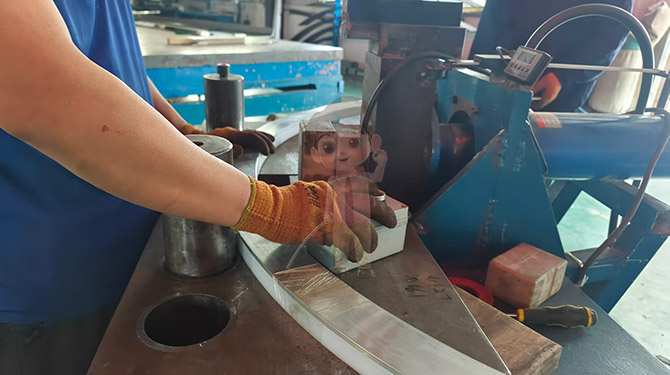
Many types of machinery and equipment require curved structural components to optimize design, functionality, and space utilization. Aluminum bending is commonly used to produce:
Equipment frames
Machine guards
Conveyor system components
Automation equipment structures
Custom enclosures
Because aluminum resists corrosion and requires relatively little maintenance, it is particularly suitable for industrial environments where durability is important.
Custom bending services also allow manufacturers to create specialized components tailored to specific operational requirements.
Applications in Renewable Energy Projects
The global shift toward renewable energy has created new opportunities for aluminum bending technologies.
Solar panel mounting systems often utilize bent aluminum structures due to their lightweight nature and resistance to environmental conditions. These systems must withstand wind loads, temperature fluctuations, and long-term outdoor exposure.
Similarly, aluminum bending is used in certain wind energy applications where lightweight yet durable structural elements are required.
As sustainability becomes an increasingly important consideration, aluminum’s recyclability further enhances its appeal in green energy projects.
Advantages of Aluminum Bending Across Industries
The growing demand for aluminum bending is driven by several significant advantages.
First, aluminum offers an outstanding balance of strength and weight. This allows designers and engineers to create structures that are durable without adding unnecessary mass.
Second, aluminum's natural corrosion resistance makes it suitable for both indoor and outdoor environments. Unlike some materials that require extensive protective coatings, aluminum performs well under a variety of conditions.
Third, aluminum bending supports greater design flexibility. Complex curves, arches, and custom shapes can be produced with high precision, allowing architects and engineers to achieve unique project goals.
Finally, modern aluminum bending processes enable consistent production quality. Advanced machinery and digital controls help ensure accurate dimensions and repeatable results across large production runs.
The Importance of Professional Aluminum Bending Services
Successful aluminum bending requires more than simply shaping metal. Factors such as material grade, profile geometry, bending radius, and structural requirements must all be carefully considered during the manufacturing process.
Professional aluminum bending companies utilize specialized equipment, experienced technicians, and rigorous quality control procedures to ensure optimal outcomes. They can also provide engineering support, design consultation, and custom manufacturing solutions tailored to project needs.
Whether producing a single prototype or a large-scale commercial order, working with an experienced aluminum bending provider helps ensure that components meet both aesthetic and performance expectations.
Aluminum bending has become an essential manufacturing process across a wide range of industries. From elegant architectural facades and curved window systems to transportation components, industrial equipment, and renewable energy structures, bent aluminum profiles offer a combination of strength, flexibility, and visual appeal that few materials can match.
As design trends continue to evolve and demand for lightweight, high-performance materials grows, aluminum bending technology will remain a crucial solution for engineers, architects, and manufacturers worldwide. By enabling precise shaping and customized fabrication, aluminum bending helps transform innovative ideas into practical, durable, and visually impressive finished products.
 LIST
LIST17
2026-06
Number of visitors:1
HOT NEWS
-
Custom Aluminum Profile Stretch Bending Solutions
2026-09-01
-
Professional Metal Bending for Custom Fabrication Projects
2026-08-17
-
Aluminum Bending Technology: Processes, Applications, and Industry Advantages
2026-08-01
-
Window and Door Profile Bending Services: Precision Curved Aluminum Solutions for Modern Architecture
2026-07-17