



 English
 Chinese
 Japan
Japan German
News

Metal Bending Applications Across Construction, Automotive, and Industrial Sectors
Metal bending is a fundamental manufacturing process that shapes metal sheets, tubes, and profiles into desired forms without removing material. By applying controlled force through specialized equipment such as press brakes, roll bending machines, and CNC bending systems, manufacturers can produce components with precise angles, curves, and dimensions. This process has become a cornerstone of modern fabrication because it combines efficiency, strength, and design flexibility.
Across industries, metal bending supports the production of everything from structural steel frameworks and automotive chassis to industrial machinery and energy infrastructure. As manufacturers increasingly seek lightweight designs, improved durability, and cost-effective production methods, the importance of precision metal bending continues to grow. Its versatility enables companies to meet demanding engineering requirements while maintaining high production efficiency and product quality.
Metal bending offers several advantages that make it one of the most widely used fabrication techniques. Unlike machining processes that remove material, bending reshapes metal while preserving most of its original strength. This allows manufacturers to create complex geometries with minimal material waste. The process also reduces the need for multiple welded or assembled parts, simplifying production and lowering overall manufacturing costs.
Advancements in CNC technology have further enhanced the capabilities of metal bending. Modern bending equipment can achieve extremely tight tolerances and repeatable results, making it suitable for industries where precision and consistency are critical. Whether producing a single custom component or thousands of identical parts, metal bending provides the flexibility needed to satisfy a wide range of production requirements.
The construction sector is one of the largest users of bent metal products. Structural steel components used in commercial buildings, industrial facilities, bridges, and public infrastructure often require bending to achieve specific shapes and load-bearing characteristics. Bent steel beams, channels, brackets, and support members help create structures that are both strong and efficient.
Beyond structural applications, metal bending plays a significant role in architectural design. Modern buildings increasingly feature curved facades, decorative panels, canopies, handrails, and customized metal elements that contribute to a distinctive appearance. Architects frequently rely on bent metal components to transform creative concepts into practical and visually appealing structures.
Roofing and cladding systems also depend heavily on metal bending. Flashings, gutters, edge trims, and roof panels must be accurately formed to ensure proper weather protection and water management. Precision bending improves installation efficiency while enhancing the durability and performance of these building systems.
Bridge construction provides another important example. Curved steel sections, reinforcement plates, and protective barriers often require advanced bending techniques to meet both structural and aesthetic objectives. As infrastructure projects become increasingly complex, the demand for high-quality bent metal components continues to rise.
The automotive industry relies extensively on metal bending to manufacture vehicles that are safe, lightweight, and efficient. Many of the structural components found in modern cars, trucks, and commercial vehicles are created through precision bending processes. Vehicle frames and chassis systems often incorporate bent metal sections that provide excellent strength while reducing overall weight.
One of the most visible applications is found in automotive exhaust systems. Exhaust pipes must navigate limited space within the vehicle while maintaining smooth airflow and proper emissions performance. Tube bending technology allows manufacturers to create complex pipe configurations that fit precisely within the vehicle's design constraints.
Safety-related components also benefit from metal bending. Reinforcement structures, impact protection systems, and roll-over protection elements are commonly produced using bent steel tubing and formed metal sections. These components help improve crashworthiness and passenger protection while maintaining vehicle performance.
The rapid expansion of electric vehicle production has created new opportunities for metal bending applications. Battery enclosures, support frames, cooling system components, and charging infrastructure all require precisely formed metal parts. As automakers continue to pursue lightweight vehicle designs, advanced bending technologies are becoming increasingly important for processing aluminum alloys and high-strength steels.
In addition to structural applications, metal bending is widely used for interior and exterior vehicle components. Seat frames, dashboard supports, trim structures, and mounting brackets all depend on precise bending operations to achieve proper fit, functionality, and durability.
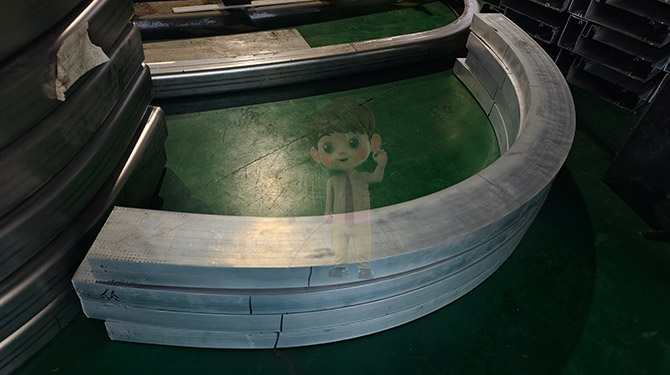
Industrial manufacturing encompasses a broad range of equipment and systems that depend on metal bending. Heavy machinery used in construction, mining, and agriculture often incorporates bent metal components designed to withstand demanding operating conditions. Equipment frames, protective guards, support structures, and mounting systems all benefit from the strength and reliability provided by precision bending.
Within manufacturing facilities, metal bending contributes to the production of machinery used for automation, material handling, packaging, and processing operations. These machines require accurately formed parts that ensure smooth operation and long-term performance. Even minor dimensional variations can affect equipment efficiency, making precision bending an essential part of industrial production.
Storage and logistics systems also rely on bent metal products. Warehouse shelving, pallet racking, storage cabinets, and transport carts are commonly fabricated using bent steel components. The ability to create strong yet lightweight structures allows businesses to maximize storage capacity while maintaining safety and durability.
The energy sector represents another important area of application. Solar panel mounting systems, wind turbine structures, electrical enclosures, and power distribution equipment often include bent metal parts. These components must withstand environmental exposure while maintaining structural integrity over extended service periods.
HVAC systems and industrial piping networks further demonstrate the versatility of metal bending. Ductwork, pipe supports, ventilation components, and fluid transport systems require carefully formed metal sections that enable efficient installation and operation. Customized bends help optimize system layouts while minimizing space requirements.
Recent technological developments have significantly improved the efficiency and accuracy of metal bending processes. CNC-controlled machinery enables manufacturers to produce complex parts with exceptional precision and consistency. Automated systems reduce setup times, improve productivity, and minimize the risk of human error.
Simulation software has also become an important tool in modern metal fabrication. Engineers can analyze bending operations before production begins, helping identify potential issues and optimize manufacturing parameters. This reduces material waste, shortens development cycles, and improves overall product quality.
Automation and robotics are increasingly integrated into bending operations, particularly in high-volume manufacturing environments. These technologies allow companies to achieve greater production efficiency while maintaining strict quality standards. As Industry 4.0 technologies continue to evolve, smart manufacturing systems are expected to further enhance the capabilities of metal bending operations.
Metal bending is a vital manufacturing process that serves as the foundation for countless products and structures across the construction, automotive, and industrial sectors. Its ability to create strong, precise, and cost-effective components makes it indispensable in modern engineering and fabrication. From the structural frameworks of buildings and bridges to the chassis of vehicles and the machinery that powers industrial production, bent metal components play a crucial role in supporting economic development and technological advancement.
As industries continue to pursue higher levels of efficiency, sustainability, and performance, the demand for advanced metal bending solutions will continue to grow. Innovations in automation, CNC technology, and materials processing are expected to further expand the possibilities of metal bending, ensuring its ongoing importance in the future of global manufacturing.
 LIST
LIST08
2026-06
Number of visitors:1
HOT NEWS
-
Custom Metal Bending Solutions for Industrial Manufacturing
2026-10-14
-
Aluminum Bending Services | Professional Aluminum Profile Bending Solutions
2026-09-30
-
Tensile Bending Explained: How Precision Shapes Complex Metal Profiles
2026-09-16
-
Custom Aluminum Profile Stretch Bending Solutions
2026-09-01