



 English
 Chinese
 Japan
 German

News

China Bending Services: Professional Metal Bending Solutions for Global Industries
With the continuous development of global manufacturing, the demand for high-quality metal fabrication services is increasing across various industries. Metal bending plays an essential role in modern manufacturing, allowing raw metal sheets, plates, tubes, and profiles to be transformed into precise components for different applications. For international buyers looking for reliable manufacturing partners, China bending services have become an attractive option due to their manufacturing capabilities, flexible production solutions, and competitive pricing.
From automotive components and industrial equipment to construction materials and electrical enclosures, professional metal bending services help manufacturers achieve accurate shapes, consistent dimensions, and efficient production. Understanding the advantages, processes, materials, and applications of metal bending in China can help businesses make better sourcing decisions.
1. What Are China Bending Services?
China bending services refer to professional metal forming and fabrication solutions provided by manufacturers in China. These services involve applying controlled force to metal materials to create specific angles, curves, and shapes without cutting or removing material.
Depending on project requirements, manufacturers can provide different bending solutions, including sheet metal bending, CNC bending, tube bending, plate bending, and custom metal forming.
Common bending processes include:
- Sheet Metal Bending: Used to transform flat metal sheets into various shapes, such as brackets, panels, covers, and enclosures.
- CNC Bending: Uses computer-controlled equipment to achieve accurate bending angles and repeatable production results.
- Tube Bending: Creates curved or angled metal tubes for automotive systems, furniture, machinery, and industrial structures.
- Plate Bending: Processes thicker metal plates for construction equipment, industrial machinery, and heavy-duty applications.
- Custom Metal Bending: Provides customized forming solutions based on customer drawings, specifications, and project requirements.
Professional Chinese metal fabrication manufacturers can often combine bending with cutting, punching, welding, drilling, and surface finishing to provide more complete manufacturing solutions.
2. Why Choose China Bending Manufacturers?
China has developed a comprehensive manufacturing supply chain, making it an important sourcing destination for international businesses. Choosing a suitable Chinese bending manufacturer can offer several advantages.
Competitive Manufacturing Costs
One of the main reasons international buyers consider China bending services is cost efficiency. Manufacturers can benefit from established industrial supply chains, equipment availability, and production experience.
These advantages may help reduce manufacturing costs while maintaining the required product quality. However, actual pricing depends on material selection, product dimensions, bending complexity, order quantity, and finishing requirements.
Advanced Production Equipment
Many professional metal fabrication factories in China use modern CNC press brakes, hydraulic bending machines, laser cutting systems, and automated production equipment.
These technologies help improve production consistency, reduce manual errors, and support the manufacturing of complex metal components.
Flexible Customization
Different industries require different metal shapes, dimensions, and mechanical properties. Chinese bending suppliers can provide customized manufacturing based on engineering drawings, samples, or specific technical requirements.
Whether customers need a small batch of prototype components or large-volume production, manufacturers can develop suitable production plans according to project needs.
Integrated Manufacturing Services
Some suppliers offer more than bending alone. Their services may include material sourcing, laser cutting, stamping, welding, assembly, and surface treatment.
Working with an integrated manufacturer can simplify supplier management and improve coordination between different production processes.
3. Common Materials Used in Metal Bending
Material selection is an important factor in determining bending quality, product strength, and manufacturing costs.
Different metals have different levels of ductility, tensile strength, and springback characteristics. Professional manufacturers evaluate these properties before selecting suitable bending parameters.
Common materials include:
Stainless Steel
Stainless steel is widely used because of its corrosion resistance, durability, and attractive appearance. It is commonly applied in food processing equipment, medical devices, architectural products, and industrial enclosures.
Carbon Steel
Carbon steel offers good strength and versatility. It is frequently used for machinery frames, structural brackets, industrial components, and construction equipment.
Aluminum
Aluminum is lightweight, corrosion-resistant, and relatively easy to process. It is widely used in automotive manufacturing, aerospace components, electronic housings, and transportation equipment.
Copper
Copper provides excellent electrical and thermal conductivity. Bending services for copper components are commonly required in electrical systems, power equipment, and heat transfer applications.
Before production, buyers should confirm material grades, thickness, mechanical properties, and applicable standards to ensure the finished components meet their intended requirements.
4. CNC Bending Technology for High-Precision Manufacturing
CNC bending is one of the most widely used technologies in modern sheet metal fabrication.
A CNC press brake uses a computer-controlled system to manage the bending process. Operators input parameters such as bending angles, dimensions, material thickness, and tooling configurations. The machine then performs bending operations according to the programmed settings.
Compared with conventional manual bending, CNC technology offers several benefits.
First, it improves dimensional consistency, particularly when manufacturing large quantities of similar components.
Second, it allows manufacturers to produce multiple bending angles and complex geometries with greater process control.
Third, CNC systems can help reduce setup time and material waste when production parameters are properly optimized.
For industries requiring accurate metal components, CNC bending can provide an efficient solution for both prototype manufacturing and mass production.
However, final accuracy also depends on material properties, tooling conditions, machine calibration, operator experience, and quality inspection procedures.
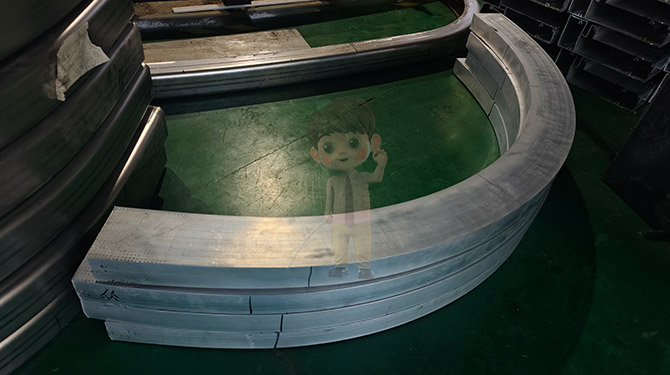
5. Applications of China Bending Services Across Industries
Metal bending is used in a wide range of industrial applications. Different industries require different bending methods and product specifications.
Automotive Industry
Automotive manufacturers use bent metal components in vehicle frames, exhaust systems, brackets, structural supports, and interior parts. Precision bending helps ensure proper assembly and structural performance.
Construction Industry
The construction sector uses bent metal products for steel structures, architectural panels, handrails, support brackets, and building components.
Electrical and Electronics Industry
Metal bending is essential for manufacturing electrical cabinets, control panels, equipment housings, mounting brackets, and protective enclosures.
Industrial Machinery
Machinery manufacturers require custom-bent metal frames, machine covers, mounting plates, and structural components to support different equipment designs.
Furniture Manufacturing
Metal tubes and profiles are frequently bent to produce furniture frames, chair legs, tables, shelves, and decorative structures.
With customized bending solutions, manufacturers can support different product designs and industry-specific requirements.
6. Quality Control in Professional Metal Bending Services
Quality control is essential when sourcing metal bending products from China. Even small dimensional deviations can affect product assembly, structural performance, and final product appearance.
Reliable manufacturers should establish quality inspection procedures throughout the production process.
Important quality control measures include:
- Material Inspection: Verify material grades, thickness, and specifications before production.
- Dimensional Inspection: Check product dimensions, bending angles, and critical tolerances.
- Surface Inspection: Identify scratches, dents, cracks, and other visible defects.
- Process Monitoring: Monitor machine parameters and production conditions during bending.
- Final Inspection: Confirm that finished products meet approved drawings and customer requirements.
For more complex projects, buyers can also request first article inspection, inspection reports, material certificates, and other relevant quality documentation.
Clear technical communication and well-defined acceptance criteria are essential for achieving consistent manufacturing results.
7. How to Choose a Reliable China Bending Supplier
Selecting the right supplier is an important step in international sourcing. Buyers should evaluate several factors before placing an order.
Manufacturing Experience: Check whether the supplier has experience producing similar metal components and serving relevant industries.
Equipment Capabilities: Understand the supplier's available bending machines, processing capacity, material range, and maximum workpiece dimensions.
Engineering Support: A professional manufacturer should be able to review drawings, identify potential manufacturing challenges, and suggest practical improvements.
Quality Management: Ask about inspection procedures, quality documentation, and production traceability.
Communication and Delivery: Reliable communication, clear quotations, and realistic delivery schedules help reduce project risks.
It is also advisable to request product samples or arrange a factory audit before committing to large-volume orders.
8. Conclusion: Reliable Metal Bending Solutions from China
China bending services provide international manufacturers with flexible metal fabrication options for a wide range of industrial applications. From precision CNC sheet metal bending to custom tube and plate bending, Chinese manufacturers can support different production requirements through established manufacturing capabilities and integrated processing services.
When choosing a China bending supplier, businesses should consider more than price alone. Manufacturing experience, equipment capabilities, material quality, technical support, inspection procedures, and delivery performance are all important factors.
By working with a qualified metal bending manufacturer and providing clear engineering specifications, international buyers can improve production efficiency, control manufacturing costs, and obtain metal components that meet their project requirements.
 LIST
13
2026-11
Number of visitors:1
HOT NEWS
-
China Bending Services: Professional Metal Bending Solutions for Global Industries
2026-11-13
-
Aluminum Profile Bending: A Complete Guide to Processes, Materials, and Applications
2026-10-29
-
Custom Metal Bending Solutions for Industrial Manufacturing
2026-10-14
-
Aluminum Bending Services | Professional Aluminum Profile Bending Solutions
2026-09-30