



 English
 Chinese
 Japan
 German

News

Aluminum Profile Bending: A Complete Guide to Processes, Materials, and Applications
Aluminum profile bending is a widely used manufacturing process that transforms straight aluminum profiles into curved shapes to meet different design and engineering requirements. Thanks to aluminum’s lightweight properties, corrosion resistance, and excellent strength-to-weight ratio, this process is commonly used in construction, automotive manufacturing, industrial equipment, and architectural design.
What Is Aluminum Profile Bending?
Aluminum profile bending involves applying controlled force to aluminum extrusions to create specific curves, radii, or complex shapes without compromising their structural integrity. Depending on the profile’s shape, thickness, and aluminum alloy, different bending techniques can be used to achieve accurate and consistent results.
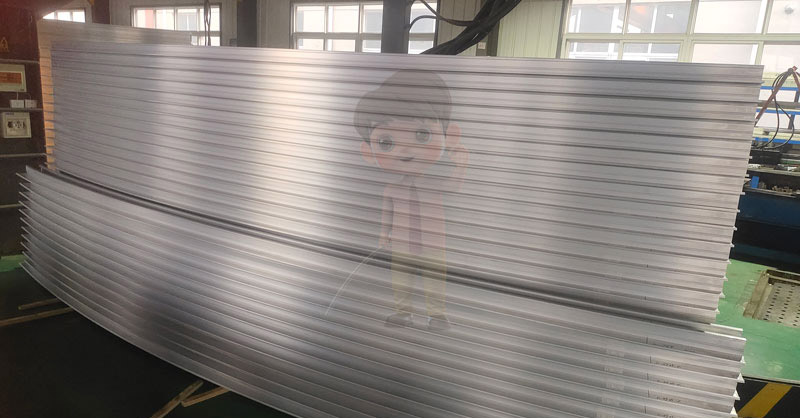
Common Aluminum Profile Bending Processes
Several bending methods are available to suit different production needs.
- Roll Bending: This method uses a series of rollers to gradually form aluminum profiles into large-radius curves. It is ideal for architectural structures, curved window frames, and circular components.
- Press Bending: A press applies force to bend the profile into a predetermined shape. This technique is suitable for relatively simple bends and smaller production runs.
- Stretch Bending: The aluminum profile is stretched under tension while being bent around a forming die. This helps reduce wrinkles and maintain a smooth surface, making it suitable for decorative and architectural applications.
- Rotary Draw Bending: The profile is drawn around a rotating die to achieve precise and repeatable bends. It is commonly used for applications that require tight tolerances and consistent geometry.
Choosing the Right Aluminum Alloy
Material selection plays an important role in bending quality. Different aluminum alloys offer different levels of strength, ductility, and formability.
For example, 6063 aluminum is popular in architectural applications because of its excellent extrudability and surface finish. 6061 aluminum provides higher strength for structural and industrial components, although it may require more careful bending control. Softer tempers generally allow easier bending, while stronger tempers may increase the risk of cracking or deformation.
The profile’s cross-sectional design, wall thickness, and bending radius should also be considered before production begins.
Key Factors Affecting Bending Quality
Achieving accurate aluminum profile bending requires careful control of several factors. An excessively small bending radius can cause cracks, while insufficient support may lead to twisting, wrinkling, or cross-sectional distortion. Springback, which occurs when aluminum partially returns to its original shape after bending, must also be considered.
To minimize these issues, manufacturers should select suitable equipment, optimize bending parameters, and conduct sample tests when necessary. Proper inspection helps ensure dimensional accuracy, consistent curvature, and a high-quality surface finish.
Applications of Aluminum Profile Bending
Aluminum profile bending is used across a wide range of industries. In architecture, it creates curved curtain walls, window frames, railings, and decorative structures. In transportation, bent aluminum profiles are used in vehicle frames, interior components, and lightweight structural parts. Industrial applications include machine frames, conveyor systems, equipment enclosures, and custom support structures.
The ability to produce complex curves while maintaining low weight makes aluminum profile bending a valuable solution for both functional and aesthetic designs.
Aluminum profile bending combines material expertise, specialized equipment, and precise process control to produce reliable curved components. By selecting the right alloy, bending method, and design parameters, manufacturers can reduce material waste, improve product quality, and meet demanding application requirements. As industries continue to seek lightweight and flexible design solutions, aluminum profile bending will remain an important manufacturing process.
 LIST
29
2026-10
Number of visitors:1
HOT NEWS
-
Aluminum Profile Bending: A Complete Guide to Processes, Materials, and Applications
2026-10-29
-
Custom Metal Bending Solutions for Industrial Manufacturing
2026-10-14
-
Aluminum Bending Services | Professional Aluminum Profile Bending Solutions
2026-09-30
-
Tensile Bending Explained: How Precision Shapes Complex Metal Profiles
2026-09-16