



 English
 Chinese
 Japan
Japan German
News

Custom Metal Bending Solutions for Industrial Manufacturing
Custom metal bending is an essential process in modern industrial manufacturing, providing manufacturers with the flexibility to transform flat metal sheets, plates, and profiles into precise shapes for a wide range of applications. From automotive components and construction materials to industrial machinery and electrical enclosures, metal bending plays a critical role in producing durable, functional, and cost-effective metal parts.
As industries continue to demand higher precision, improved production efficiency, and customized product designs, professional metal bending solutions have become increasingly important. By combining advanced equipment, skilled operators, and optimized manufacturing processes, manufacturers can achieve consistent bending results while meeting specific project requirements.
What Is Custom Metal Bending?
Custom metal bending is a metal fabrication process that uses controlled force to deform metal into a desired angle, curve, or shape without cutting through the material. Depending on the application, manufacturers can bend stainless steel, carbon steel, aluminum, copper, and other metals into components with different dimensions and geometries.
Unlike standard bending operations, custom metal bending is tailored to the unique requirements of each project. Factors such as material thickness, bending radius, bend angle, component dimensions, and production volume are considered during the manufacturing process.
Common custom metal bending services include sheet metal bending, plate bending, tube bending, pipe bending, and precision profile bending. These processes support the production of simple brackets, complex structural components, machine frames, protective housings, and other industrial parts.
Common Metal Bending Methods
Choosing the appropriate bending method is essential for achieving the required accuracy, strength, and surface quality.
1. CNC Press Brake Bending
CNC press brake bending is widely used in industrial sheet metal fabrication. A computer-controlled press brake applies force through a punch and die to form precise bends in metal sheets.
This method is particularly suitable for manufacturing brackets, panels, cabinets, enclosures, and machine components. CNC technology allows operators to program bend angles, back gauge positions, and processing sequences, improving repeatability and reducing production errors.
For manufacturers handling complex designs or repeated production runs, CNC press brake bending offers an effective combination of precision, flexibility, and productivity.
2. Roll Bending
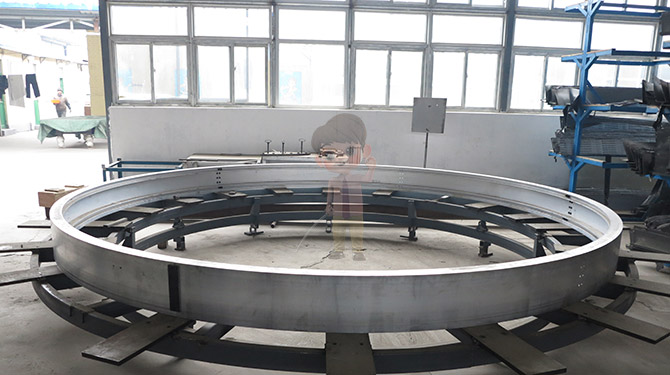
Roll bending uses a series of rollers to gradually shape metal into curved or cylindrical forms. It is commonly used to manufacture large-radius components, curved panels, cylindrical shells, and structural sections.
This process is suitable for applications where smooth, continuous curves are required rather than sharp angular bends. Roll bending is frequently used in construction, energy equipment, tank fabrication, and industrial structural manufacturing.
3. Tube and Pipe Bending
Tube and pipe bending transforms straight metal tubes or pipes into specific angles and curved configurations. Depending on the material, diameter, wall thickness, and bend radius, manufacturers may use rotary draw bending, mandrel bending, or other specialized techniques.
Accurate tube bending helps maintain dimensional consistency and, when properly controlled, reduces problems such as wrinkling, flattening, and excessive wall thinning.
Typical applications include automotive exhaust systems, hydraulic assemblies, industrial frames, handrails, and fluid transportation systems.
4. Plate Bending
Plate bending is designed for thicker and heavier metal materials. Specialized machinery applies controlled pressure to form large metal plates into curved or angular components.
This method is commonly used in heavy equipment manufacturing, pressure vessel fabrication, shipbuilding, mining machinery, and large structural projects. Careful control of material properties and bending parameters is essential to achieve the required geometry without cracking or excessive deformation.
Key Benefits of Custom Metal Bending Solutions
Improved Design Flexibility
Custom metal bending allows manufacturers to produce components according to specific drawings, engineering requirements, and installation conditions. This flexibility supports both simple parts and complex geometries that may be difficult to achieve through standard fabrication methods.
Manufacturers can also optimize component shapes to reduce unnecessary joints, simplify assembly, and improve overall product functionality.
High Precision and Repeatability
Modern CNC bending equipment helps maintain consistent bend angles and dimensions across multiple parts. When combined with suitable tooling, accurate programming, and effective quality control, it can reduce dimensional variation and minimize the need for rework.
This consistency is particularly important in industries where components must fit together accurately during assembly.
Cost-Effective Manufacturing
Custom metal bending can reduce manufacturing costs by minimizing material waste, simplifying component designs, and reducing the number of separate fabrication operations.
For example, a carefully designed bent metal component may replace several individual parts that would otherwise require cutting, welding, and additional assembly. However, the actual cost savings depend on the design, material, tooling requirements, and production volume.
Enhanced Structural Performance
Properly designed bends can improve the stiffness and rigidity of metal components. Bent flanges, channels, and formed edges can help strengthen panels and brackets without necessarily increasing material thickness.
The final performance depends on material selection, bend geometry, loading conditions, and manufacturing quality.
Materials Used in Industrial Metal Bending
Material selection directly affects the bending process and the performance of the finished component.
Stainless steel is valued for its corrosion resistance, durability, and strength. It is widely used in food processing equipment, medical equipment, industrial enclosures, and chemical processing systems.
Carbon steel is commonly selected for its strength, availability, and cost-effectiveness. It is suitable for structural supports, machinery frames, brackets, and general industrial components.
Aluminum offers a favorable strength-to-weight ratio and good corrosion resistance in many applications. It is frequently used in transportation equipment, lightweight structures, electronic housings, and architectural products.
Copper is valued for its electrical and thermal conductivity. Bent copper components are used in electrical systems, heat exchangers, and specialized industrial equipment.
Each material has different ductility, springback behavior, minimum bend radius, and thickness limitations. Manufacturers should evaluate these characteristics before selecting the bending method and tooling.
Factors to Consider When Choosing a Metal Bending Partner
Selecting a reliable metal bending supplier can significantly influence product quality, production lead times, and overall project costs.
First, evaluate the supplier's equipment capabilities. Machines should be appropriate for the required material thickness, component dimensions, bend angles, and production volume.
Second, review the supplier's experience with similar projects. Experience in a particular industry can help identify potential design challenges and recommend practical manufacturing improvements.
Third, confirm the quality control process. Depending on the application, this may include dimensional inspections, angle measurements, material verification, first-article inspection, and documented quality procedures.
Fourth, consider production capacity and delivery reliability. A suitable manufacturing partner should be able to support the required order quantity and communicate realistic lead times.
Finally, assess the supplier's engineering support. Early collaboration on drawings, bend allowances, tolerances, and material selection can help prevent manufacturing problems and reduce unnecessary costs.
How to Optimize a Custom Metal Bending Project
Successful metal bending begins with a well-prepared design. Engineering drawings should clearly specify material grade, thickness, dimensions, bend angles, inside bend radii, and required tolerances.
Designers should avoid unnecessarily tight bend radii because these can increase the risk of cracking, depending on the material and its condition. Adequate spacing between bends and holes should also be considered to prevent distortion and tooling interference.
Springback is another important factor. After the bending force is removed, metal may partially return toward its original shape. Manufacturers compensate for this behavior by adjusting bending parameters based on the material and process.
For complex components, prototype production and first-article inspection can identify issues before full-scale manufacturing begins. Once the design and process are validated, standardized machine settings and inspection procedures help improve production consistency.
Effective communication between designers, purchasing teams, and fabrication specialists is equally important. Sharing complete technical information early in the project allows manufacturers to recommend suitable processes and provide more accurate quotations.
Industrial Applications of Custom Metal Bending
Custom metal bending supports a broad range of industrial sectors.
In automotive manufacturing, bent metal parts are used in brackets, frames, exhaust systems, and structural assemblies. In construction, bending processes produce metal supports, architectural panels, handrails, and structural profiles.
Industrial machinery manufacturers rely on bent steel and aluminum components for machine guards, equipment housings, mounting brackets, and support structures. Electrical and electronics manufacturers use precision-bent sheet metal to create control cabinets, server enclosures, and protective covers.
The energy sector also benefits from specialized bending solutions for equipment housings, structural components, piping systems, and large fabricated assemblies.
Across these industries, the ability to customize dimensions, shapes, and material specifications helps manufacturers meet application-specific performance requirements.
Custom metal bending solutions are a valuable part of modern industrial manufacturing, offering design flexibility, dimensional accuracy, structural functionality, and opportunities for cost optimization. From CNC press brake bending and roll bending to specialized tube and plate forming, the right process depends on the material, component geometry, production requirements, and intended application.
By working with an experienced metal fabrication partner, manufacturers can improve product consistency, reduce unnecessary processing steps, and achieve more reliable production outcomes. Careful material selection, detailed engineering drawings, appropriate tooling, and systematic quality control are essential to successful results.
As manufacturing requirements continue to evolve, customized metal bending will remain an important solution for producing precision-engineered components across a wide range of industrial applications.
 LIST
LIST14
2026-10
Number of visitors:1
HOT NEWS
-
Custom Metal Bending Solutions for Industrial Manufacturing
2026-10-14
-
Aluminum Bending Services | Professional Aluminum Profile Bending Solutions
2026-09-30
-
Tensile Bending Explained: How Precision Shapes Complex Metal Profiles
2026-09-16
-
Custom Aluminum Profile Stretch Bending Solutions
2026-09-01