



 English
 Chinese
 Japan
Japan German
News

Professional Metal Bending for Custom Fabrication Projects
Metal bending is a fundamental process in modern metal fabrication, allowing manufacturers to transform flat sheets, plates, tubes, and other metal profiles into precise three-dimensional shapes. From industrial machinery and automotive components to architectural structures and custom equipment, professionally bent metal parts are used in a wide range of applications.
For custom fabrication projects, choosing the right metal bending process and manufacturing partner can have a significant impact on product quality, production efficiency, and overall project cost. Professional metal bending combines appropriate equipment, accurate engineering, experienced operators, and strict quality control to produce components that meet specific design requirements.
What Is Metal Bending?
Metal bending is a manufacturing process that permanently deforms metal into a desired angle or shape without removing a significant amount of material. Depending on the application, manufacturers may work with materials such as carbon steel, stainless steel, aluminum, copper, and various metal alloys.
Common bending methods include press brake bending, roll bending, tube bending, and specialized forming processes. Each method has its own advantages and is selected according to factors such as material type, thickness, part geometry, production volume, and required dimensional accuracy.
For custom fabrication, the objective is not simply to bend a piece of metal. The process must produce repeatable results while maintaining the structural and visual requirements of the finished component.
Why Professional Metal Bending Matters
Precision is one of the most important considerations in custom metal fabrication. Even a small variation in bending angle or bend position can affect assembly, alignment, and overall product performance.
Professional metal bending services typically use modern CNC-controlled equipment to improve repeatability. Digital programming allows manufacturers to define bending sequences, angles, tooling configurations, and other parameters before production begins.
Accurate equipment is only part of the equation. Experienced technicians also understand material behavior, springback, tooling selection, and bend allowance. Combining technology with practical experience helps reduce production errors and improve consistency from one part to the next.
Choosing the Right Bending Method
Different fabrication projects require different bending techniques.
Press brake bending is widely used for sheet and plate metal. A press brake uses a punch and die to form precise bends and is suitable for both prototypes and larger production runs.
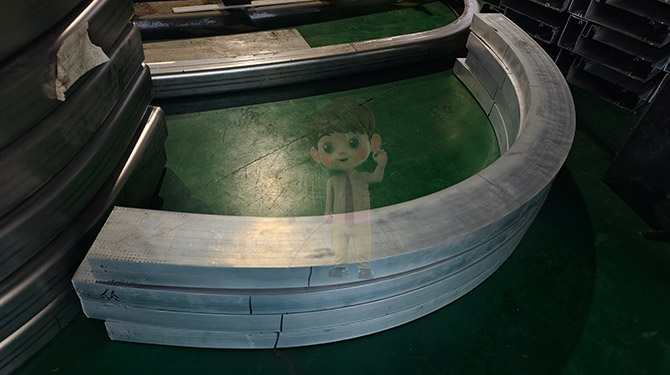
Roll bending is often used when a project requires large-radius curves or cylindrical shapes. It is commonly applied to tanks, pipes, structural components, and architectural elements.
Tube and pipe bending is designed for round, square, and rectangular tubing. Depending on the application, manufacturers may use CNC tube benders or other specialized equipment to create complex geometries while controlling deformation.
For unusual or highly specialized components, additional forming techniques may be considered. A professional fabricator can evaluate the design and recommend a suitable process based on the desired result.
Material Considerations in Metal Bending
Material selection has a direct influence on bending performance. Different metals have different levels of strength, ductility, elasticity, and springback.
Stainless steel, for example, can require greater forming force than some aluminum alloys. High-strength steel may also require specialized tooling and process parameters.
Material thickness is another important factor. As thickness increases, the required bending force generally increases, and the minimum achievable bend radius may also change.
For this reason, professional fabricators review material specifications before production. They may consider tensile strength, yield strength, grain direction, thickness tolerance, and other characteristics when developing the bending process.
The Importance of Bend Radius
Bend radius is a critical design parameter in custom metal fabrication. If a radius is too tight for a particular material and thickness, cracking, distortion, or other defects may occur.
Design engineers and fabricators should therefore determine an appropriate bend radius during the early stages of a project. A suitable radius can improve manufacturability while helping maintain the strength and appearance of the finished part.
When working with a fabrication supplier, providing accurate drawings and material specifications makes it easier to identify potential bending issues before manufacturing begins.
CNC Technology and Production Accuracy
Modern CNC metal bending equipment has improved the efficiency and repeatability of custom fabrication.
CNC systems can store bending programs and reproduce the same sequence across multiple components. This is particularly valuable for projects requiring large quantities of identical parts.
Automated measurement and positioning systems can further improve accuracy and reduce setup time. In high-volume production, these technologies can help manufacturers maintain consistent dimensions while reducing material waste.
However, automation does not eliminate the need for skilled personnel. Experienced operators are still important for machine setup, tooling selection, process verification, and quality inspection.
Custom Prototyping and Small-Batch Production
Professional metal bending is not limited to large-scale manufacturing. It is also valuable for prototypes, replacement parts, custom machinery, and small-batch projects.
During prototyping, engineers may need to test several design variations before finalizing a component. A capable fabrication partner can help identify manufacturability issues and suggest modifications that simplify production.
Small-batch manufacturing also benefits from flexible CNC equipment because programs can be adjusted without requiring extensive tooling changes. This allows businesses to produce customized components without committing to extremely large production volumes.
Quality Control in Metal Bending
Quality control should be integrated throughout the fabrication process rather than performed only after production is complete.
Before bending, materials should be checked against the required specifications. During production, operators can inspect bend angles, dimensions, surface condition, and part geometry.
For critical components, manufacturers may use precision measuring equipment to verify dimensional tolerances. Depending on project requirements, inspection records can also be maintained for quality documentation.
Consistent quality control helps identify problems early, reducing the likelihood of defective parts reaching final assembly.
Surface Protection and Finishing
After bending, metal components may require additional processes such as welding, grinding, polishing, powder coating, painting, anodizing, or other surface treatments.
The choice of finishing method depends on the material and intended application. For example, stainless steel components may be polished for appearance and corrosion resistance, while carbon steel parts may require coating or painting for environmental protection.
A fabrication supplier capable of coordinating bending with additional manufacturing processes can simplify project management and reduce the need to work with multiple vendors.
How to Prepare for a Custom Metal Bending Project
Providing complete project information is one of the best ways to improve fabrication efficiency. Customers should ideally provide engineering drawings, 3D models, material specifications, thickness, required dimensions, tolerances, surface finish requirements, and expected production quantities.
If the design is still under development, discussing the project with a fabrication specialist early can also be beneficial. The manufacturer may identify design features that are difficult or expensive to bend and suggest practical alternatives.
Designing with manufacturability in mind can reduce unnecessary processing steps, minimize material waste, and improve overall production efficiency.
Choosing a Professional Metal Bending Partner
When selecting a metal bending supplier, businesses should look beyond equipment lists and quoted prices. Important factors include manufacturing experience, machine capabilities, quality control procedures, material expertise, production capacity, and communication.
It is also useful to review previous projects and determine whether the supplier has experience with similar materials, part sizes, tolerances, and industries.
A reliable fabrication partner should be able to explain the proposed manufacturing process clearly, identify potential challenges, and provide realistic production timelines.
Professional metal bending plays an important role in custom fabrication projects across many industries. By combining suitable materials, appropriate bending techniques, CNC technology, skilled operators, and effective quality control, manufacturers can produce components with consistent dimensions and reliable performance.
For customers, successful metal fabrication begins before production. Clear drawings, accurate specifications, realistic tolerances, and early communication with the manufacturer can help prevent costly mistakes and improve the final result.Whether the project involves a single prototype, a small batch of custom components, or high-volume industrial production, selecting an experienced metal bending partner can make the manufacturing process more efficient, predictable, and cost-effective.
 LIST
LIST